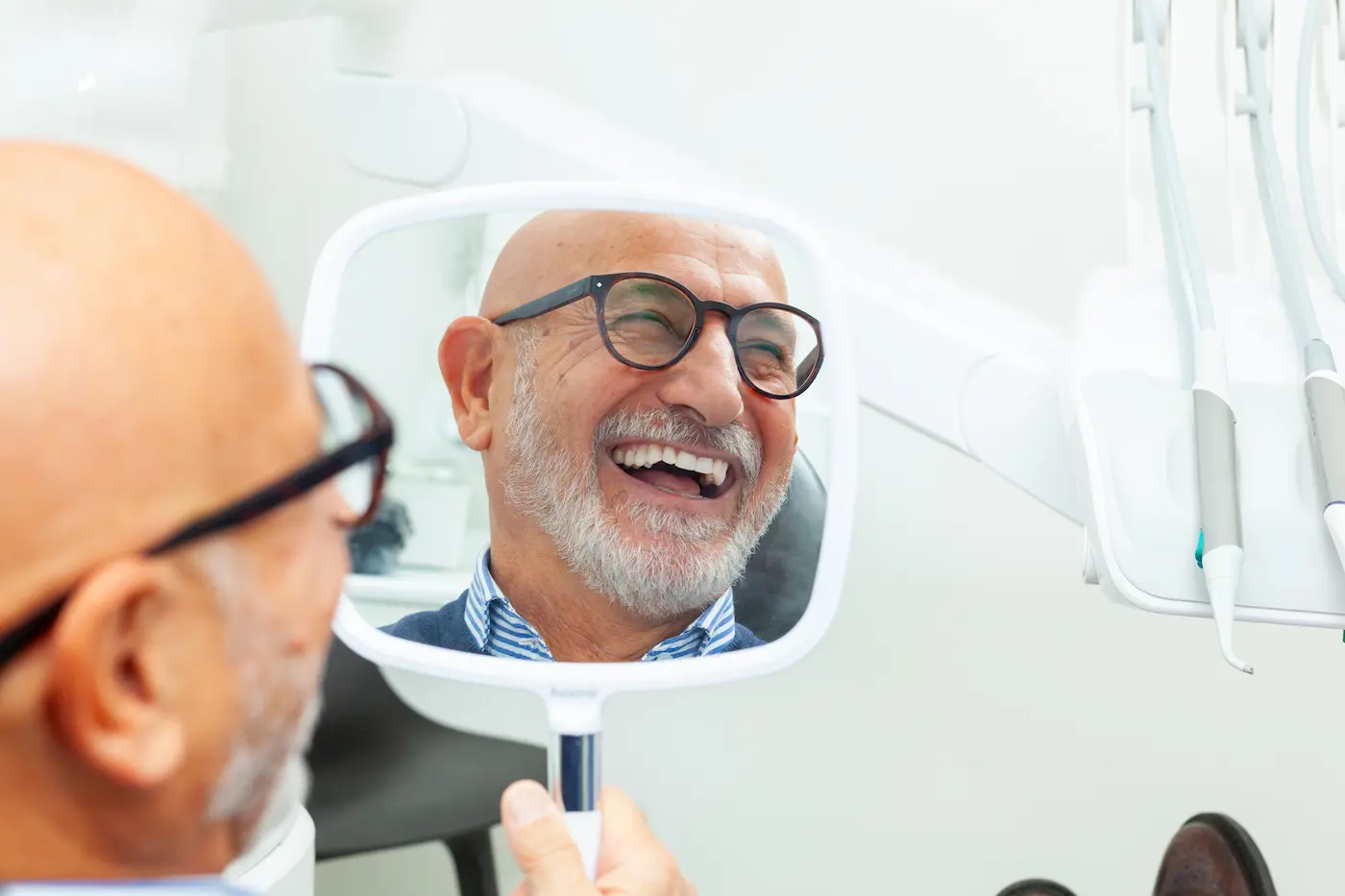
Dental Implants in Highlands Ranch, CO — Built to Last
Why Dental Implants Are the Gold Standard for Missing Teeth
Dental implants are widely considered the most complete solution for replacing a missing tooth. Unlike other options, an implant replaces not just the visible part of the tooth but also the root — the titanium post that sits in your jawbone and keeps everything stable. That root-level foundation is what separates implants from every other tooth replacement approach.
What Makes Implants Different From Dentures or Bridges
When you are weighing your options, it helps to understand what each one actually involves. A dental bridge fills a gap by anchoring to the teeth on either side, which means those healthy neighboring teeth must be shaped down to support the restoration. Dentures and partials sit on top of the gums and can shift over time, sometimes affecting how you speak or chew.
An implant, by contrast, stands entirely on its own. It does not rely on neighboring teeth and does not rest on the gumline. It functions as a self-contained tooth replacement that looks, feels, and behaves like a natural tooth. For patients who want a long-term solution with the least impact on surrounding teeth, implants are typically the most conservative and durable choice.
What Happens If You Leave a Missing Tooth Untreated
Leaving a gap in your smile is not simply a cosmetic concern. When a tooth root is no longer present in the jaw, the bone in that area begins to shrink — a process called resorption. Over time, this bone loss can affect the shape of your face, destabilize neighboring teeth, and make future tooth replacement more complex. The longer a gap goes unaddressed, the more the surrounding structures shift to fill the space, which can lead to bite problems and additional dental work down the road. Addressing a missing tooth sooner rather than later is one of the most straightforward ways to protect the rest of your oral health.
Benefits of Choosing Dental Implants in Highlands Ranch
Patients who choose implants often describe the experience as life-changing — not because of the procedure itself, but because of what they get back. Here is what makes implants worth considering:
- Permanence. A well-placed implant is designed to last decades, and for many patients, a lifetime. You are not replacing a temporary fix every few years.
- Bone preservation. The titanium post stimulates the jawbone the way a natural root does, helping prevent the bone loss that follows tooth loss.
- Full function. Implants allow you to eat, speak, and smile without the restrictions that can come with removable appliances. Biting into an apple is not off the table.
- Natural appearance. The custom crown placed on your implant is matched to the color and shape of your surrounding teeth. Most people will not be able to tell it apart from a natural tooth.
- Confidence. Many patients say that having a complete, stable smile changes how they feel in conversations, photos, and everyday interactions — quietly, but meaningfully.
- No impact on neighboring teeth. Because the implant stands alone, the teeth next to it stay untouched.
Are You a Candidate for Dental Implants?
Most adults with a missing tooth are potential candidates for implants. A few key factors shape whether the timing is right and whether any preparatory steps are needed.
Bone density is the most important structural consideration. The implant post needs enough bone to fuse with securely. If bone has been lost — which is common when a tooth has been missing for a while — a bone grafting procedure can rebuild that foundation before the implant is placed. Bone grafting is a routine preparatory step, not a barrier to treatment.
Overall health matters too. Conditions like uncontrolled diabetes or active gum disease may need to be stabilized first. We will review your health history and take a close look at your jaw during your consultation so we can give you an honest picture of what your path forward looks like.
We do not believe in ruling people out before we have the full picture. If you have been told elsewhere that implants are not an option for you, it is worth having a second conversation with our team.
Your Dental Implant Process at Mountain West Family Dentistry
Understanding what to expect makes the whole process feel much less daunting. Here is how it works at our restorative dentistry practice.
Your first visit is a consultation. We review your dental and medical history, take a 3D CT scan of your jaw, and talk through your goals. If you have questions or concerns — including worries about pain or cost — this is the time to ask them. You will leave with a clear treatment plan, not a vague estimate.
If preparatory work like bone grafting is needed, that happens first, followed by a healing period. Once your jaw is ready, the titanium post is placed in the bone under local anesthesia. Nitrous oxide is available if you feel anxious, and Dr. Rahul Patel is known for a gentle, unhurried approach that puts nervous patients at ease. After placement, the post fuses with the bone over the course of a few months — a natural process that requires no action on your part beyond normal healing.
When healing is complete, we attach an abutment (a small connector piece) and take impressions for your custom crown. Once the crown is ready, it is secured in place, and your restoration is complete.
The Implant Crown: Completing Your Restoration
The crown is the visible part of your implant — the piece that looks and functions like a natural tooth. At Mountain West, we design implant crowns to match the shape, size, and shade of your surrounding teeth. The result is a restoration that blends seamlessly into your smile. The crown is secured to the implant post with a precision fit, giving you the stability to chew and speak with confidence from day one.
3D CT Scanning and Treatment Planning
Accurate planning is what separates a predictable implant outcome from an uncertain one. We use 3D cone beam CT scanning to create a detailed, three-dimensional image of your jawbone before any treatment begins. This lets us see bone density, identify the precise placement site, and anticipate any complications — all before we start. It is one of the most important tools we have for making sure your implant is placed correctly the first time.
Dental Implant Cost and Insurance in Highlands Ranch
Implant cost varies based on how many teeth are being replaced, whether preparatory procedures like bone grafting are needed, and the specifics of your treatment plan. We believe in transparent pricing — you will receive a detailed estimate before any work begins, with no surprises.
We accept several major insurance plans and can help you understand what your benefits may cover toward implant treatment. Because implant coverage varies widely from plan to plan, we encourage you to contact us about insurance and financing options so we can verify your specific benefits ahead of your consultation. Flexible financing options are also available to help make treatment more manageable over time.
Frequently Asked Questions About Dental Implants
New Patients
How long do dental implants last?
With good oral hygiene and regular dental visits, dental implants are designed to last many decades — and for many patients, a lifetime. The titanium post that fuses with your jawbone is highly durable. The crown placed on top may eventually need to be replaced after years of normal wear, but the implant itself is built to be a permanent solution.
Does getting a dental implant hurt?
Most patients are surprised by how manageable the process is. The placement procedure is done with local anesthesia, and nitrous oxide is available if you feel anxious. Some tenderness and swelling in the days after placement is normal and typically resolves quickly. Our team takes care to make sure you are comfortable at every step — if you have had difficult dental experiences before, please tell us. We will adjust accordingly.
How many appointments does the implant process take?
The implant process generally takes place over several appointments spread across a few months. After the initial consultation and any preparatory work, the titanium post is placed and given time to fuse with the bone — a process that usually takes three to six months. Once healed, the final crown is attached, completing your restoration. The total number of visits depends on your individual treatment plan.
Can I get an implant if I've already lost bone?
Bone loss does not automatically disqualify you from getting an implant. A bone grafting procedure can rebuild the jaw in areas where bone volume has decreased, creating a stable foundation for the implant. We use 3D CT scanning to assess your bone precisely and will walk you through your options honestly before recommending a treatment path. Many patients who were told implants were not possible have gone on to have successful restorations after grafting.